Home electricity bills can skyrocket after installing a wall-box charger, primarily due to the significant power consumption required to charge an electric vehicle (EV).
If left unaddressed, this can negatively impact your future finances. To manage these high costs, you can implement charging efficiencies, such as charging during off-peak hours and utilizing renewable energy sources.
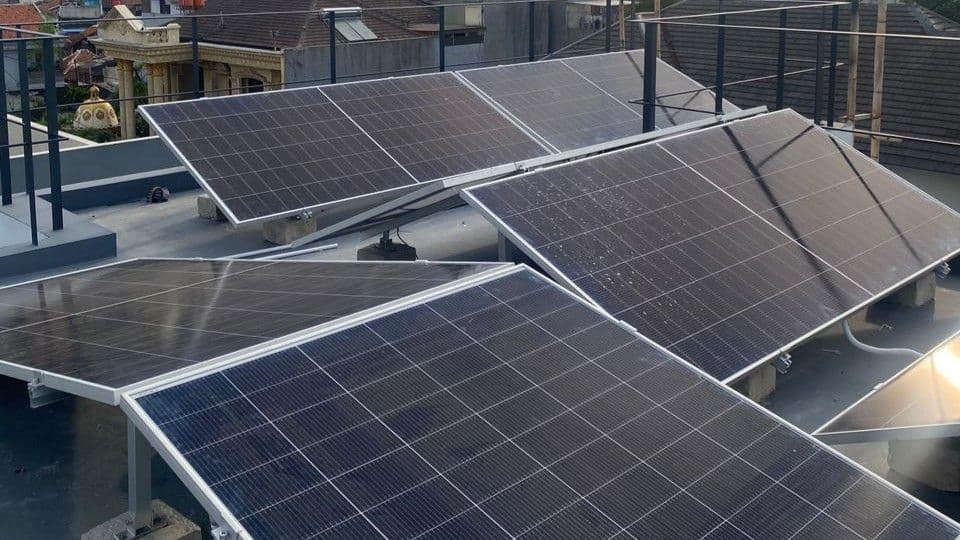
Installing a solar power system (PLTS) or solar panel to charge your electric vehicle is a smart investment to cut down on electricity waste. With a lifespan of up to 25 years, it is an excellent choice for protecting yourself against rising electricity costs.
Why use solar power or solar panel to charge EV batteries?
You can use a solar power system to charge your EV battery at home. This method is highly cost-effective and promotes energy independence.
Solar power systems generate electricity by converting sunlight into usable power. An inverter then converts the current so it can be used to charge the vehicle.
PLN (the state electricity company) states that a power capacity of 7,700 Volt-Amperes (VA) is required for home EV charging. Anything less than 7,700 VA could lead to sudden power surges or blackouts.
Before contacting a solar installation service, ensure you know your EV's power requirements and consider your daily driving habits. These factors determine the appropriate type of solar system and capacity.
Understanding power capacity is crucial for ensuring the safety of the solar panel installation used for charging your EV.
Types of solar power systems for EV charging
An "On-Grid" solar power system is a popular choice for EV charging because it can reduce electricity bills by up to 50%. Power for charging is supplied directly from the electricity generated by the system.
The process begins with solar panels capturing sunlight; the generated power is then exported to the grid (PLN) via a bi-directional meter. This export process enables significant savings on electricity bills for up to 25 years.
For those who habitually charge their cars at night, an on-grid solar power system (PLTS) generates a surplus of electricity during the day. This surplus is exported to the grid (PLN) and acts as a credit to offset the cost of charging your electric vehicle at night.
Beyond simply saving on electricity costs an on-grid solar system can serve as a dedicated power source for charging your electric vehicle, an ideal solution if you have switched from a diesel/fossil fuel vehicle to an electric one.
Batari Energy Offers Solar Power Installation Services for Electric Vehicle Charging
Batari Energy is an integrated solar energy provider that recommends on-grid solar power systems for electric vehicle charging setups.
In addition to supplying components and handling installation, Batari Energy offers consultation services to design the optimal charging capacity for your home electric vehicle charger.
Contact us via this link to consult on an on-grid solar power system for charging your electric vehicle.