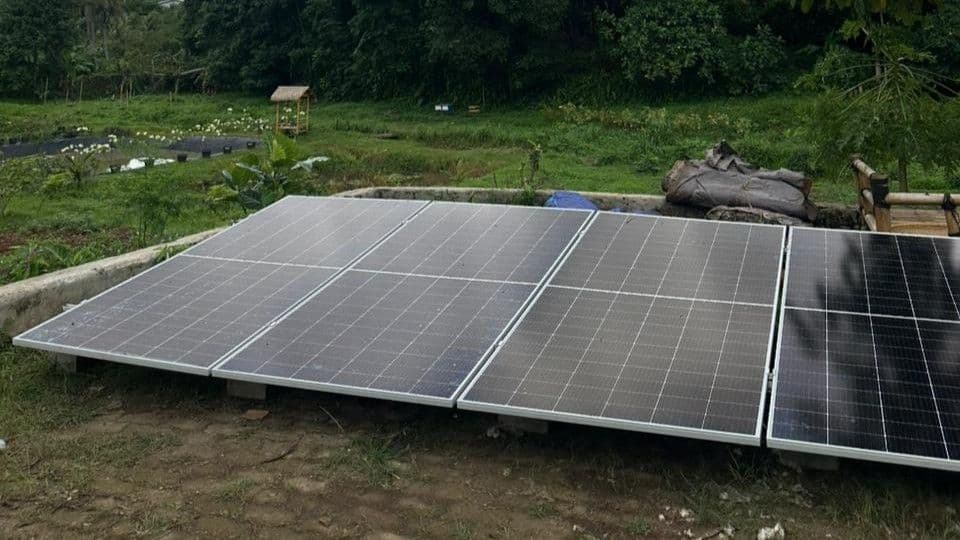
Solar panel installations in Indonesia are gaining popularity as a renewable energy source. While they offer the benefit of energy independence, they also entail certain risks.
One such risk is the possibility of solar panels being struck by lightning. Do solar panels continue to generate electricity after a lightning strike?
This concern is understandable, given Indonesia's high annual rainfall, ranging from 2,000 to 3,000 mm, due to its geographical location. Countries situated in the equatorial zone are prone to heavy rains accompanied by lightning.
Do solar panels actually attract lightning?
A lightning strike generates billions of volts of energy and extreme heat in a fraction of a second. When lightning hits an object, it causes structural damage; electronic devices, in particular, can suffer severe destruction.
Solar panels are at risk of being struck because they are typically installed on rooftops or in open areas. The higher the installation site, the greater the risk of a lightning strike. However, one thing is certain: solar panels do not possess the ability to attract lightning. Nevertheless, lightning can strike any object, regardless of whether it contains metal or carries an electric current.
Can a solar power system (PLTS) be damaged by a lightning strike?
Before discussing the damage itself, it is important to understand the impact of lightning-induced surges on the system. Potential effects on solar power system components include:
1. Power surges
Lightning strikes cause massive power surges. Sudden surges in power flow can damage the electrical components within your building.
2. Physical component damage
A powerful lightning strike can damage physical components such as solar panels and inverters. Visible signs include cracks or burn marks on the solar panels.
3. Loss of efficiency
Even minor damage to solar panel cells can reduce energy generation efficiency. When cells are damaged, they cannot effectively convert sunlight into electrical energy, resulting in decreased energy production.
How to protect solar power systems from lightning
You can protect your solar power system components by implementing a grounding system. In theory, grounding involves diverting unwanted electrical current into the ground to minimize the risk of damage to solar power system components.
The purpose of grounding is to ensure that any large electrical surges are immediately diverted to the ground, preventing damage to components. If components are damaged, the solar power system will not function correctly.
Install a surge protector on the solar panel system to absorb voltage spikes caused by lightning; this allows sudden electrical surges to be diverted directly to the ground.
Lightning protection for solar power systems can be enhanced by improving the roof structure. Ensure the roof structure supporting the solar panels is sturdy and incorporates conductive materials to channel lightning-induced electricity to the ground.
How to protect solar panels from lightning
If you plan to use a solar power system in an area with high rainfall, consider the following steps to safeguard your solar panels against lightning strikes.
1. Install a grounding system
Install solar panels with an appropriate grounding system to channel electricity from lightning strikes into the ground.
2. Install a surge protector
Ensure a surge protector is properly installed to safeguard critical components such as inverters and batteries. These components are highly sensitive to sudden power surges; such surges can cause immediate damage due to electrical overload.
3. Install a lightning protection system
If your home is located in a lightning-prone area, install a lightning rod on the roof to direct lightning strikes straight to the ground.
Solar panels and lightning safety
Solar panels can be effectively protected from lightning if proper installation and protective measures are taken. A panel's resilience against lightning damage depends on its ability to withstand sudden power surges and divert the strike's energy to the ground.
However, solar panels mounted on roofs remain highly susceptible to lightning strikes due to their elevated position. If you are planning to install a solar PV system, on-grid, off-grid, or hybrid, contact Batari Energy via this link for a lightning-safe solar installation solution.